

The Lure of Family History
Jon Whyte's question

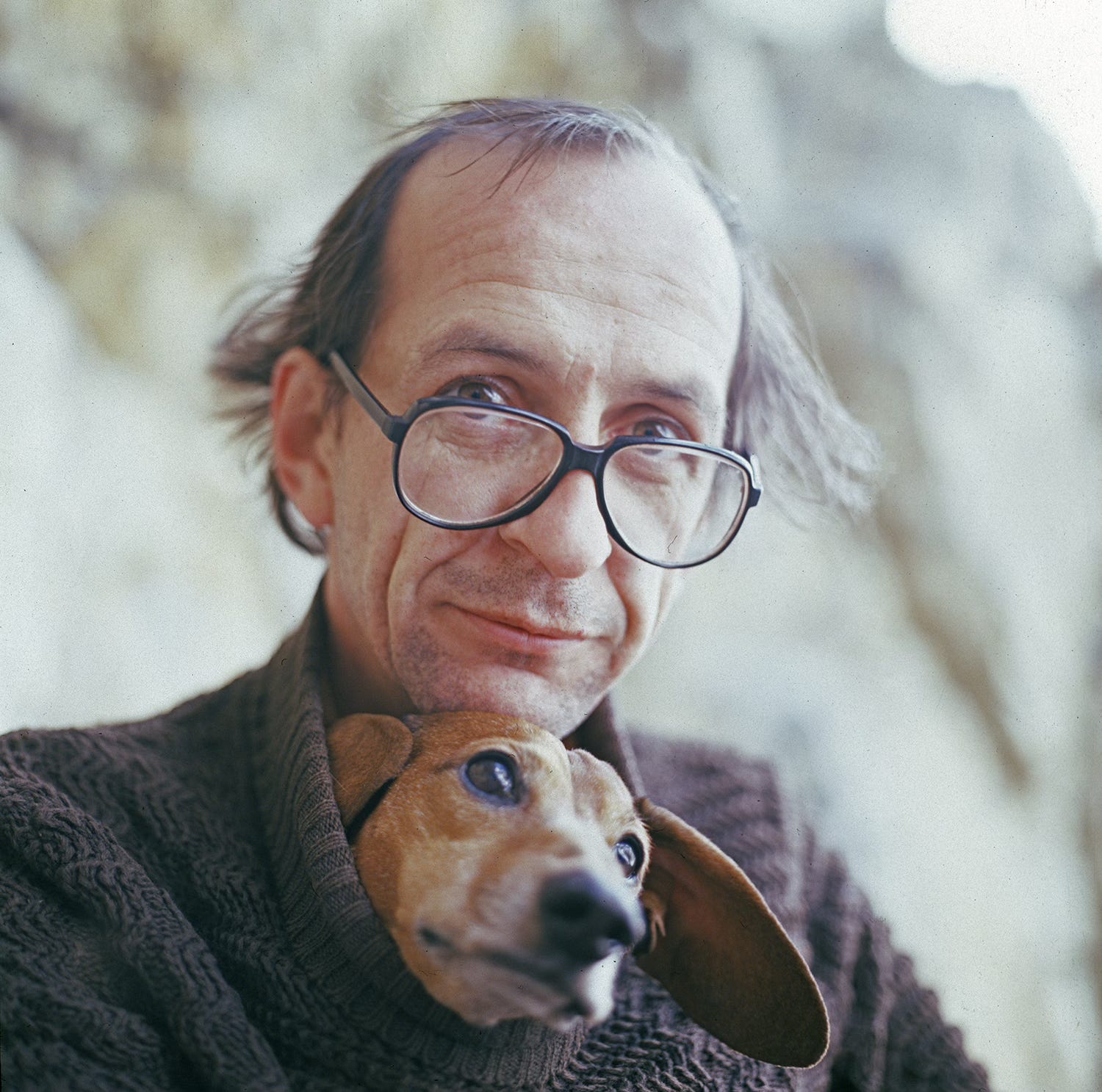
I thought it would be a good thing to let you know, dear readers, how I got mixed up with trying to preserve, sometimes resurrect, exhibit, and promote my grandfather’s photographs.
In 1972, the first year of my photo program at the Banff Centre, I researched Man Ray for our assignment on historical photographers; I chose him because I had lived in Paris, so it felt like I was walking those streets again.
My friend Ed Cavell chose Byron Harmon. It felt strange to have someone in my class studying my grandfather. I love his pictures but he isn’t famous like Man Ray or Alfred Stieglitz and he wasn’t an art photographer. Or was he?
The next year, at the opening for our final photo exhibition, my friend poet and fellow Banffite Jon Whyte and I were standing beside my installation piece, Window, when he nonchalantly said, “why don’t you do something with your grandfather’s photographs?” I stammered an inane reply. Jon loved my gullibility and often set me up, so I wasn’t sure if he meant what he said or was pulling my leg.
At the time Jon was writing epic poems about historical Canadian figures, like Henry Kelsey, and these included poems about his aunt and uncle, artists Catherine and Peter Whyte.
I took Jon’s comment more literally.
Byron’s negatives are stored in a three drawer wooden filing cabinet in the storeroom at Byron Harmon Photos. I open the top drawer, cough as must and dust erupt. The drawers are jammed full of his 5X7 black-and-white negatives which have been crammed into rotting brown paper envelopes. The name of the trip is typed in the upper left corner: Bow Movie Trip 1914, Bow Movie Trip 1917, Columbia Icefields 1924. When I remove negatives from the envelopes bits of paper crumble away. Along the Line of the CPR: trains, canyons, city streets, farming on the prairies.

In another drawer are 5X7 glass plates and film negatives of Indigenous portraits.

Under a long counter in the workroom, where postcard orders are packed, the shelves are stacked with black-and-white prints which used to be for sale in Harmony Drugstore on A shaped display stands. Some are hand coloured. Boxes of black-and-white postcards—thousands of them.

Jon’s question sticks to me like a burr.
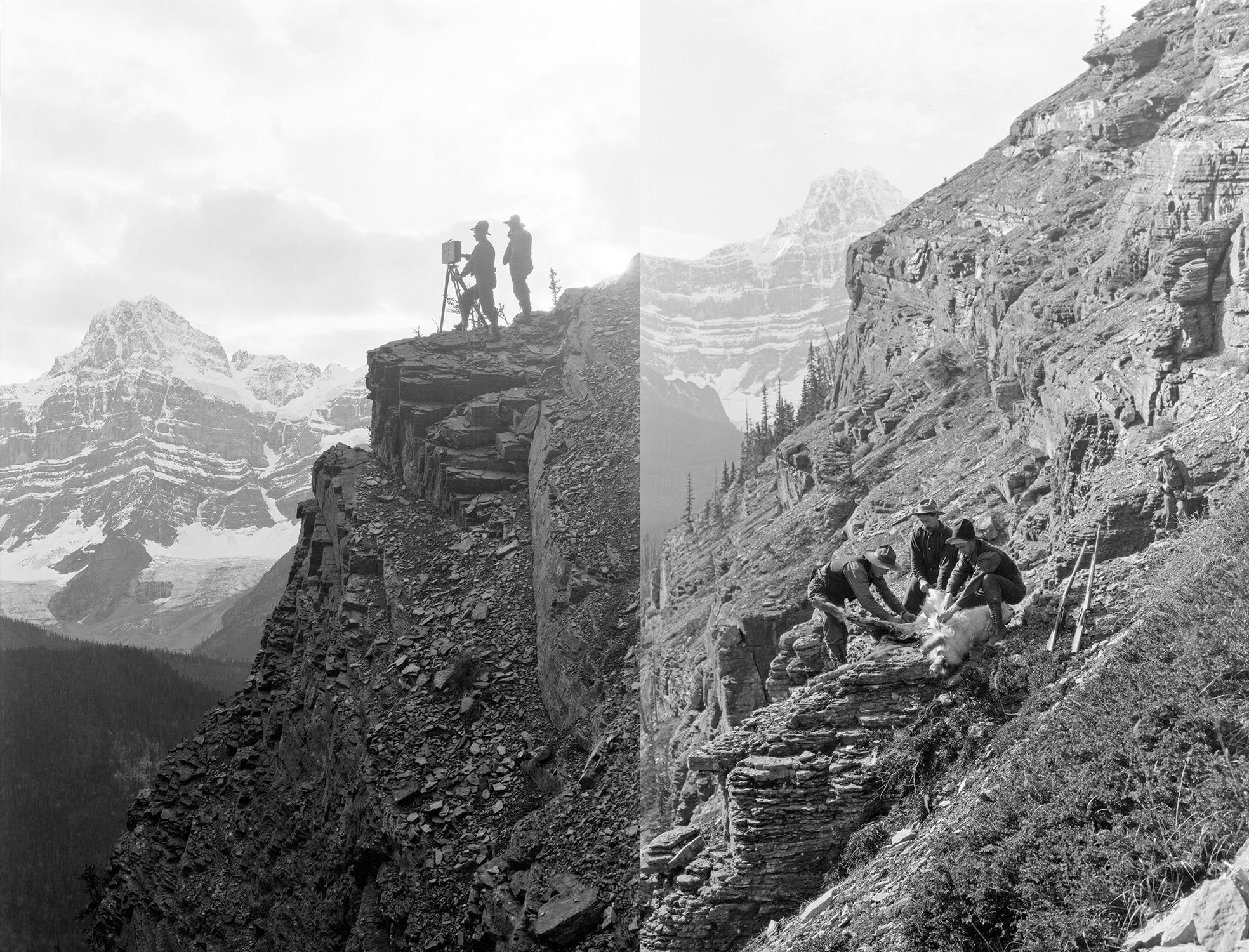
This was a hunting trip, not because Byron was a hunter himself, but because he wanted to film and photograph that popular sport. In my view, Byron was documenting all aspects of life in the mountains, one photo excursion at a time.
In the left hand image the man operating the movie camera is likely the packer for the trip. Behind him is Jimmy Simpson, the guide. Byron often did set-up shots like this. Either he was filming while someone else clicked the shutter of the still camera or, as in this case, someone else was posing as the cinematographer while he took the still shot.
This blog is associated with the website Harmon Mountain Studios where you can view a large selection of Harmon mountain images and order exhibition quality prints.
Lovely to read and lovely to see the photo of Jon. You are doing a beautiful job with three generations of Harmon photographs.
Love hearing the history of your family journey in photography of the rockies.